Village of Skadi
History
Torvaldsland
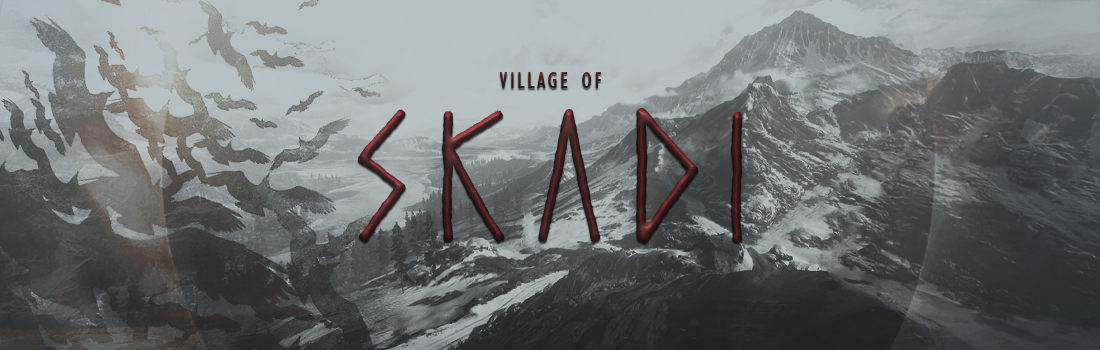
The Village of Skadi
Skadi was not founded.
She was birthed.
Long before the Hall was carved into the mountain, before stone steps climbed from the water, before longships dared the narrow fjord, this valley existed as a place of shelter between dangers. The mountains rose sharp and close, the forest pressed in, and the fjord cut deep into the land only to narrow and end where stone closed the way. Those who came here first did not name it. They simply stayed.
The north has always chosen its people carefully.
The earliest dwellers were hunters and sailors, driven inland by storms, ice, and war. They learned quickly that the fjord did not welcome careless passage. Boats were lost at Dead Man’s Bend. Men vanished in fog. Those who survived learned the water’s moods and the land’s silences. They learned where to step, when to wait, and when to turn back.
What endured was not ambition, but patience.
The Hall came later, carved where the mountain allowed it, not where men demanded it. Stone was shaped slowly, fires kept low, beams set deep. Above it, the Ancient Tree already stood, its roots breaking rock long before the first blade struck stone. Some say the tree guided the builders. Others say the builders stayed because the tree endured. Skadi has never corrected either belief.
As the Hall grew, so did the village — not outward, but inward. Homes followed the curve of the land. Paths formed where feet passed often enough to matter. Storehouses were dug where cold could be kept. Pens were built where animals could survive. Nothing here was planned for comfort alone. Everything was built for winter.
The völur arrived as such women always do — not together, not announced, not easily traced. Some were born to the north. Others came from far lands, drawn by signs they did not speak of openly. Their cabins rose near the Tree, apart from the village yet never outside it. They listened. They observed. They stayed.
Skadi did not ask them to remain.
They did not ask permission.
Time passed. Seasons turned. The Hall was tested by famine, by storm, by bloodshed, by silence. Raiders learned the fjord was no easy prize. Travelers learned the village did not offer itself freely. Those who belonged stayed. Those who did not moved on, or did not return.
The High Jarl’s line rose not through conquest, but endurance. Eldrick took the Hall not by proclamation, but by standing when others could not, by knowing the mountain as well as the men who followed him. Under his keeping, the village did not grow large. It grew steady.
Birds were trained to watch where eyes could not. Paths were marked and unmarked in equal measure. The deep caves were used when needed and left alone when not. The warm places beneath the mountain were discovered, guarded, and spoken of quietly, as all dangerous comforts should be.
Skadi did not become ancient by refusing change.
She became ancient by choosing which changes were worth surviving.
Now the village stands as it has for generations — hidden, watchful, and unyielding. The Hall still anchors the fjord. The Tree still breaks stone. The paths still remember those who walk them. The oathstone still waits for hands that mean what they say.
Skadi is not a relic of the past.
She is what remains when the past has passed.
Those who find her were never meant to do so lightly.
Those who stay are changed, whether they wish it or not.
This is not legend.
This is endurance.
This is Skadi.